
Racing on sunshine, protected by Teijinconex®
The ultimate American road trip, but not the one you would expect. Thirteen students, racing a solar-powered car right across the American heartland.
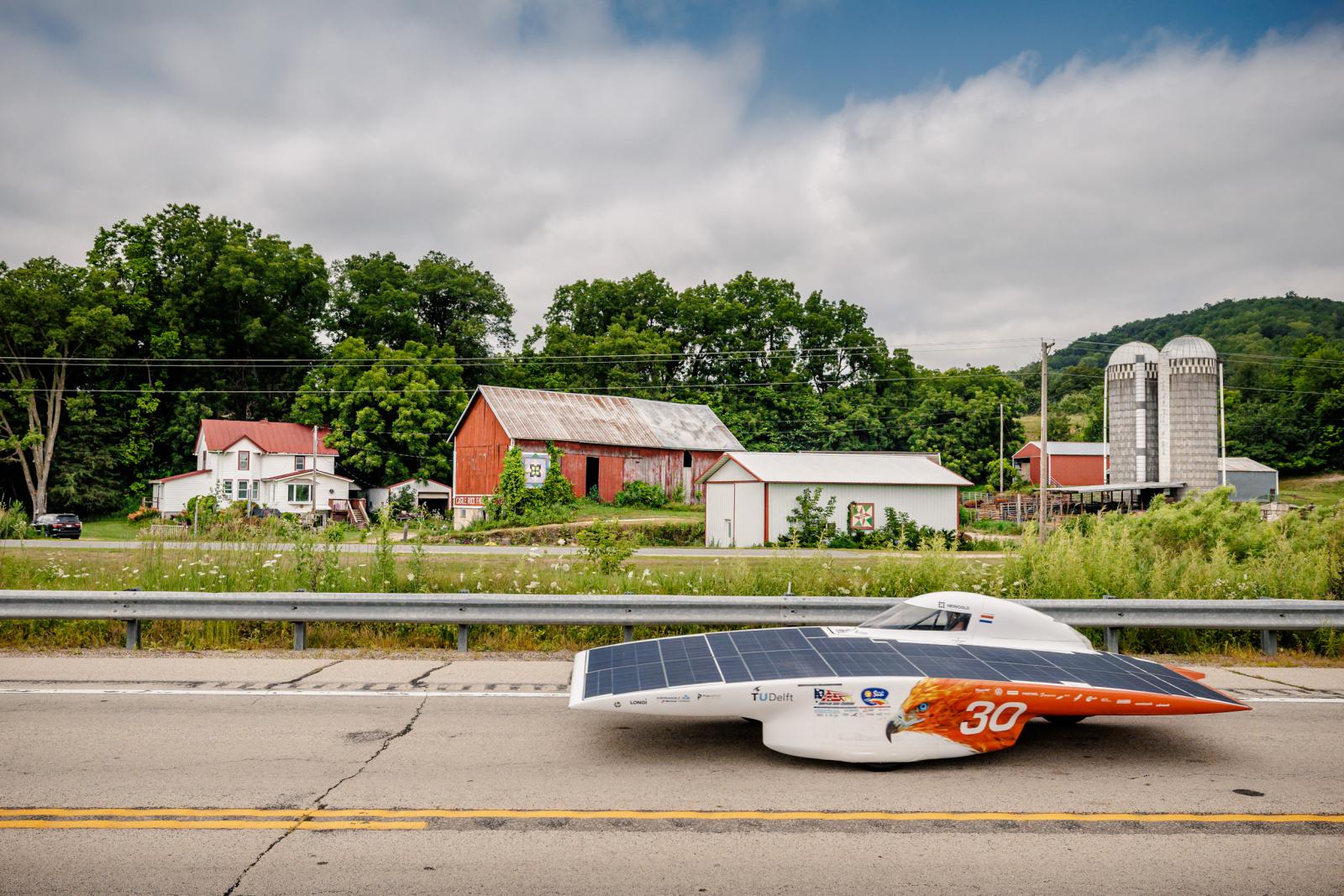
Delft Solar Team is competing in the Electrek American Solar Challenge 2026, pushing Nuna 13S from Minnesota to Texas against the best solar racing teams in the world. For the team, it is a first: despite planning the trip in 2019, COVID forced them to set it aside. Seven years on, they are finally out there.
“We were young and a little naive when we committed to this last August,” says Technical Manager Wietske Overdijkink. “There was no confirmed date, no route, parts of the regulations were still open. But we looked at each other and thought: this is exactly the kind of challenge we’re here for.”
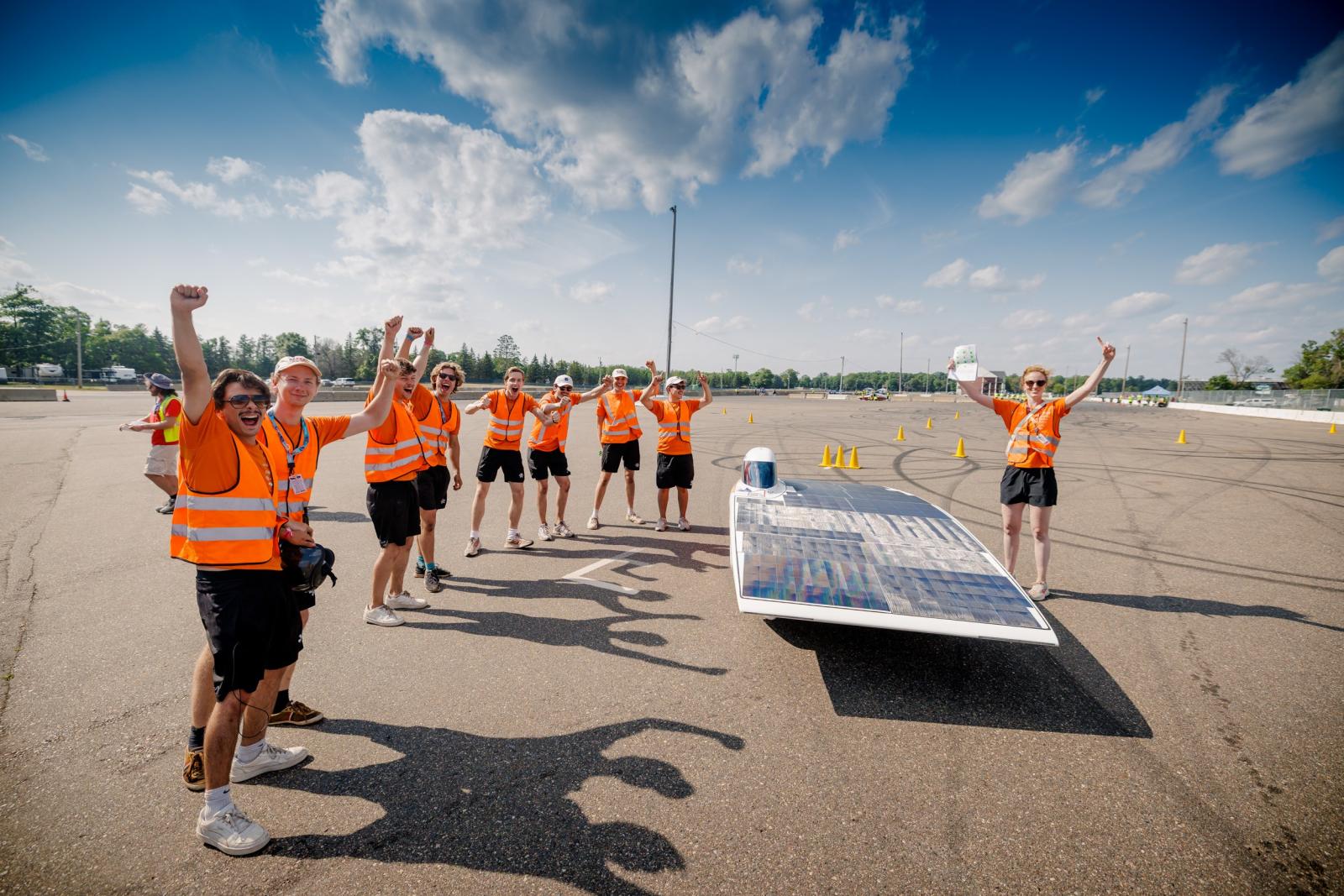
A team of 13
Delft Solar Team operates out of Delft University of Technology. Its members pause their engineering studies for a year, working full-time on designing, building, and racing a solar car. The current team has 13 people. Everyone has a defined role. No one holds back.
“We’re a small group where everyone gives a thousand percent,” says Mechanical Engineer and driver Bas van der Meer. “If needed, we’re here until three in the morning, and then we keep going. We accept nothing less than the best.”
For Bas, joining the team was a decision that had been forming since he was eight years old, when he first came across Delft Solar Team and something in him took note. He joined as a mechanical engineer three years into his aerospace degree. The driver role came later, confirmed before he had ever sat in the car.
“Once I knew I was going to be the driver, I went through every decision I’d made as an engineer and asked myself: am I shooting myself in the foot here? Am I still happy with this when I’m the one sitting inside?” he says. “Looking back, I wouldn’t have changed a thing. But you become a lot more aware.”
Built to win
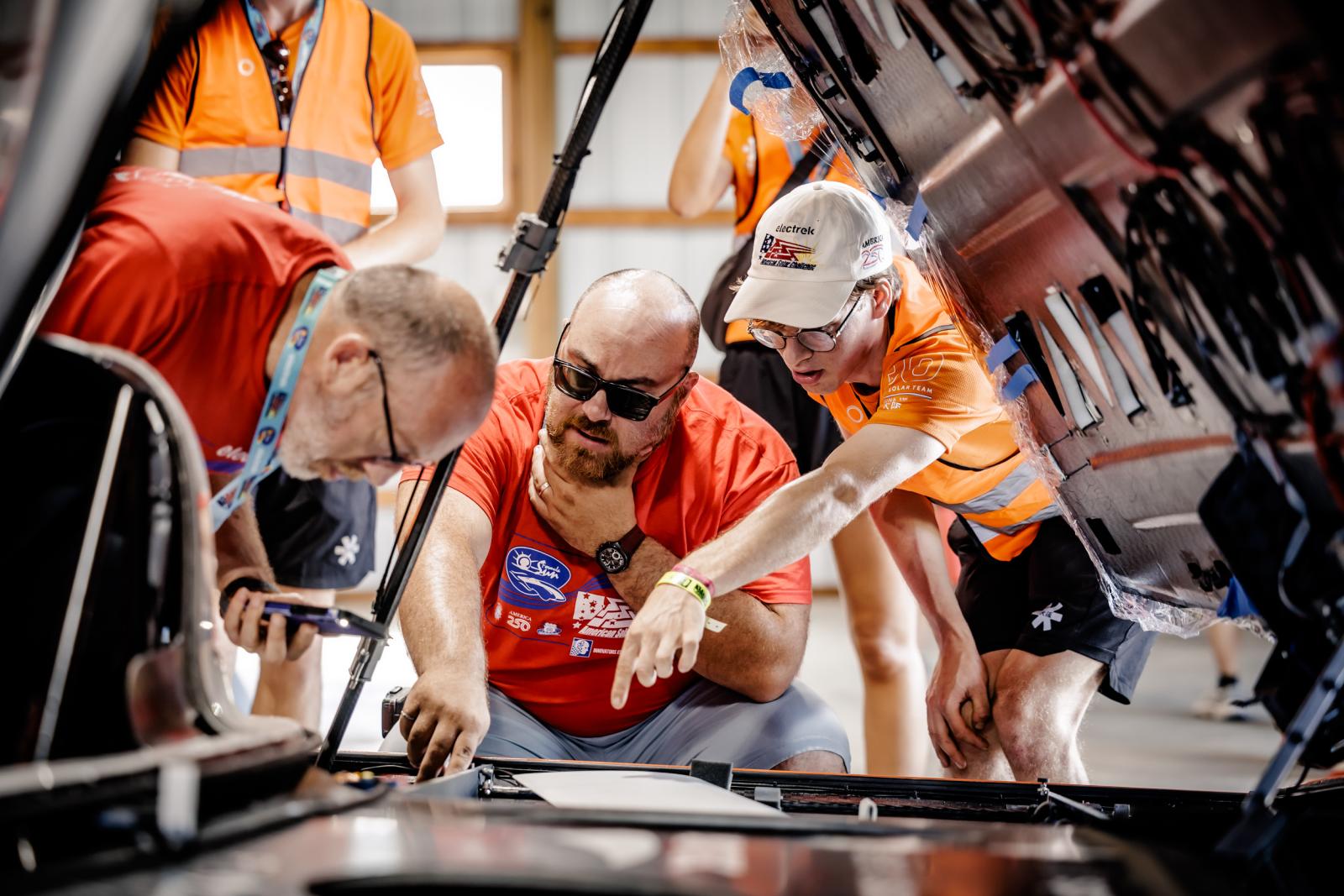
The team took the chassis from the car that won the Bridgestone World Solar Challenge in Australia last year, stripped it back to bare carbon fiber, and rebuilt everything from there. Every system was redesigned around one question: where can we gain more race minutes?
The most visible result is an improved fin system, first introduced on the Australian car and now substantially developed for 2026.
“We had a version one that worked well,” says Bas. “This year we put everything into making it reliable, not just fast. That was the gap we needed to close.”
The race runs on a loop format, different from the point-to-point structure in Australia. Teams receive a route and a time window and can choose to drive additional loops where the route allows, accumulating kilometers. Strategy drives the result as much as speed.

Managing that strategy falls on Wietske and her team. As Technical Manager, she oversees decisions that cut across every discipline: weight, energy, time, cost. In a team where every engineer has deep expertise in their own system, her job is to hold the total picture.
“A mechanical engineer comes to me and says, we need this brake disc. Then an electrical engineer comes and says, I want this battery cell. I have to see both at once and make a call,” she says. “And sometimes you’re making that call with only ten percent of the information you’d want.”
The heat problem
The race ends in Texas, where temperatures can push toward 40 to 50 °C and above in a heat wave. For a team managing battery cooling, motor temperatures, and electronics under a solar panel in full sun, a heat-stressed driver is a real engineering constraint.
“Let alone how hot it gets inside Nuna,” says Overdijkink. “We look at the whole system. Driver cooling, hardware cooling under the panel, energy input against energy burn. Everything must be balanced.”
Bas sits directly on the carbon sandwich floor of Nuna 13S, without a seat, centimeters from the road surface. He has no conventional field of view: visibility is set at the aerodynamic optimum permitted by the regulations. A chase car drives directly behind him and acts as his second pair of eyes.
“The car is like a very light go-kart,” Bas says. “Under 300 kilograms in total, nearly two meters wide, optimized for zero drag. That means zero downforce too, so in a gust of wind it goes where it wants to go. Everything is anticipation.”
Out on the route, the heat has delivered as anticipated. It has also brought a challenge the team did not fully see coming.
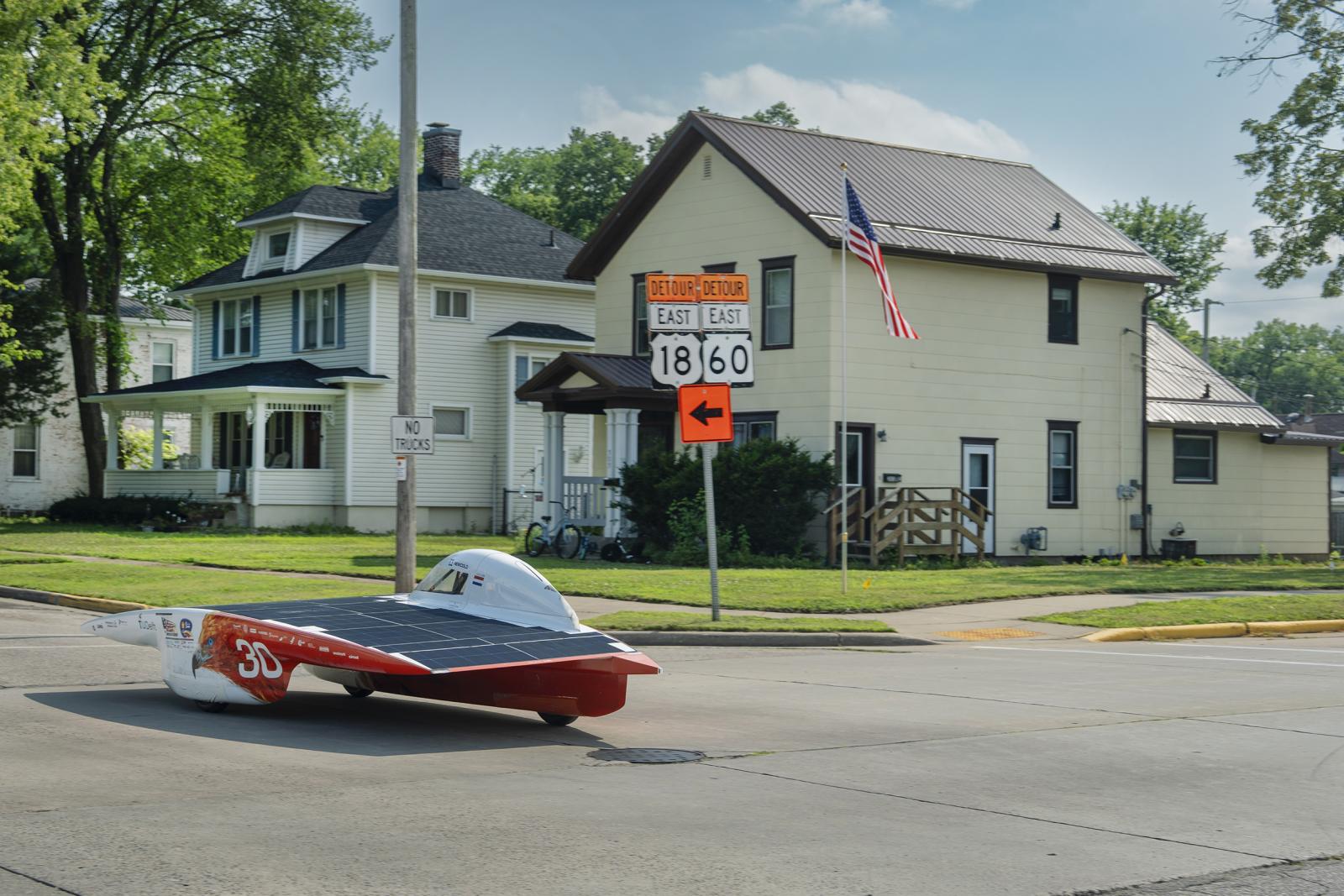
“The biggest challenge has been the combination of extreme heat and the road surface,” says Overdijkink. “We’d never raced in America before, and one thing that really surprised us was how rough many of the roads are. Nuna has a very low ride height, so every pothole is a real hazard. We’ve had to stay very alert and adapt our driving continuously.”
Where Teijinconex® fits in
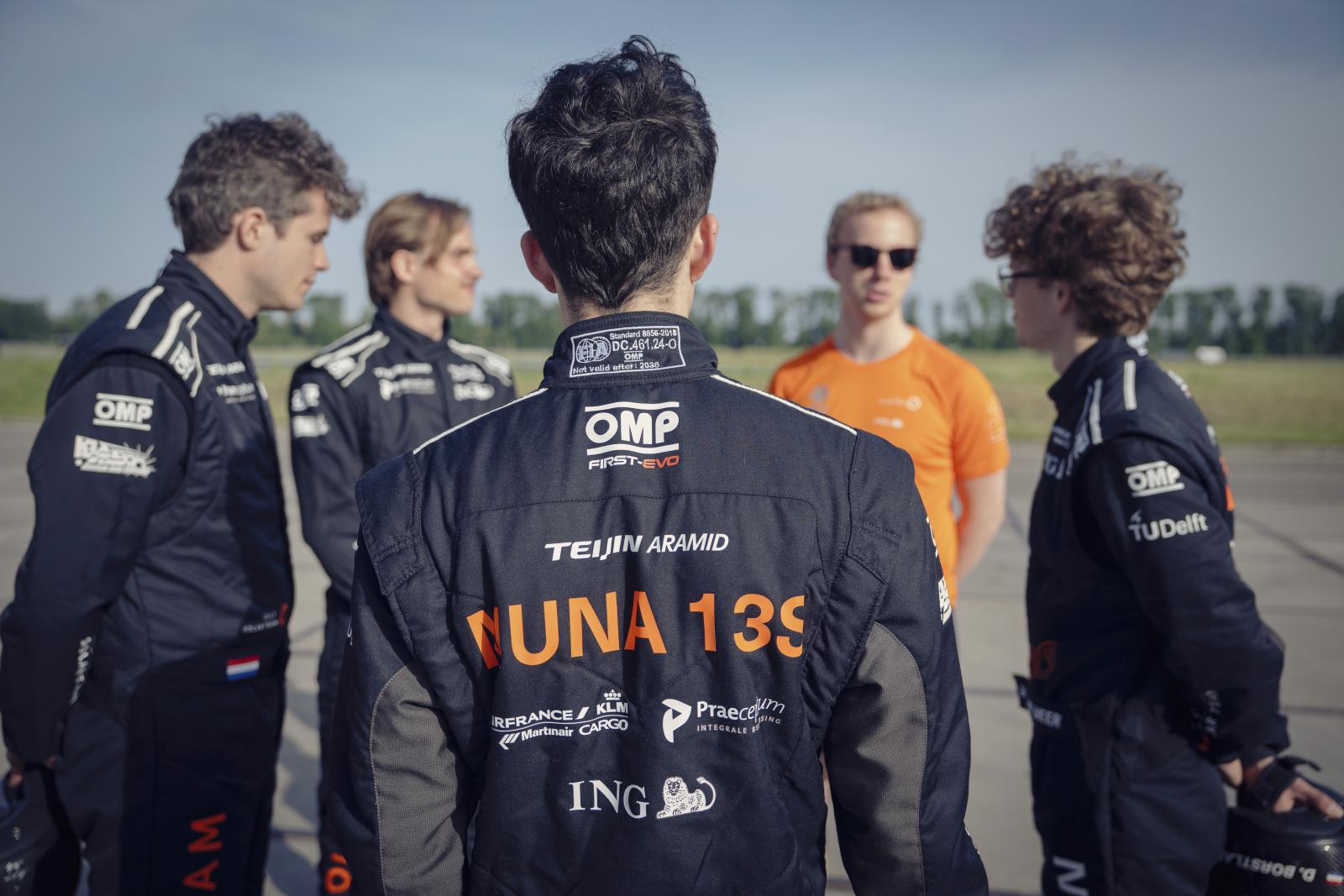
Teijin Aramid supported Delft Solar Team before, with Twaron Next® fiber in the car’s tires. For 2026, the collaboration goes further: Teijin Aramid is sponsoring four OMP First EVO racing suits made with Teijinconex® meta-aramid fiber.
The team made the decision before the American route was even confirmed. Thirteen engineers heard what Teijinconex® does and reached the same conclusion independently.
“It’s genuinely impressive technology,” says Overdijkink. “Everyone on the team reacted the same way: this is something. And we quickly realized that regardless of where or when we raced, this adds something real. The suit manages moisture, keeps the driver safe, and keeps the driver as comfortable as the conditions allow. When the Texas route was confirmed, that only became more relevant.”
Teijinconex® is an inherently flame-resistant meta-aramid fiber. Its protective properties are built into the molecular structure of the fiber itself: they do not wash out, wear out, or degrade with heat and UV exposure. Under direct flame, Teijinconex® chars and self-extinguishes. It does not melt. It does not drip.
For a driver sitting on top of a lithium battery pack, that distinction matters.
“We design on the edges of what’s technically possible,” says Overdijkink. “That’s where we operate, and we’ll always walk that line. But we will never cross it. These suits add a margin of safety that we can’t build into the car itself.”
The qualification event at the circuit in Brainerd, Minnesota, made that margin concrete. Bas drove there alone, without the chase car running directly behind him. A battery fault, a mechanical failure, a collision with another competitor: the probability is low. The consequences are not.
“Normally someone is always right there to pull me out of the car if anything happens,” says Bas. “At qualification I was on my own. A suit that will not melt or catch fire is not a comfort item at that point. It’s the difference between a scare and something you can’t undo.”
For Bas, the suits also mark something more personal. Delft Solar Team competes in top-class motorsport. Until now, the drivers have done it in sports shorts and a shirt.
“You always see drivers in race suits in photos and on TV,” he says. “Drivers wear them for a reason. It’s a mix of safety and endurance, and safety comes first. This is just the next step, and it’s one we’ve needed.”
The team registered the suits as their official race outfit at the weigh-in. That was a deliberate choice. Regulations require the decision to be fixed before the race starts: there is no switching per day based on the weather. In Texas heat, a driver who overheats is a safety risk of a different kind, and the team weighed that too.
“If the suit fits well and manages heat the way it should, it adds comfort in a car that offers very little of it,” says Bas. “I’m expecting that. Endurance is what these suits are built for.”
Out on the road, that has proved out.
“The biggest surprise has been how breathable they are,” says Bas. “I expected the suits to feel much warmer, but once we started driving, we noticed that air flows through them really well. After days in the car, the fit is still excellent, and they’ve kept us cooler than we anticipated.”
On the road
Seven years in the making, the race has also produced moments the team will carry.
“The moment that stands out the most is our first test day on public roads in America,” says Overdijkink. “We’d been working towards that for an entire year. After months of designing, building, and testing, finally seeing the car driving on American roads felt incredibly rewarding. That was the point where all of our work became real.”
“It feels like pioneering,” says Overdijkink. “Everything about this race is new to us. Every day we’re learning, adapting, and discovering something new. It really feels like we’re exploring new territory as a team.”
“We will not settle for anything less than first place,” says Overdijkink. “We never do.”