
When maintenance drives the design: a weir renewal built around fiber rope
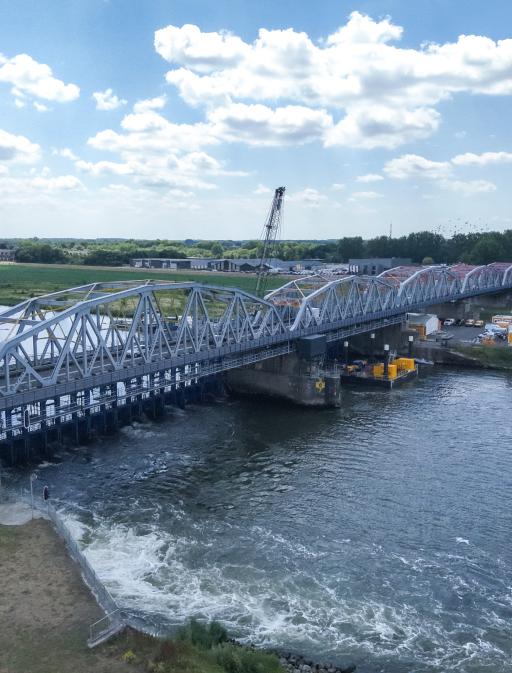
The Grave Weir has regulated water levels on the Maas river for over a century, and for most of that time its gate-lifting system has run on steel wire ropes and chains that have become progressively harder to maintain. The steel wire ropes weighed around 100 kilograms each. The chains were heavier still, around 200 kilograms. Replacing either required a crane, a barge positioned in fast-flowing water, a closed bridge, traffic management, and a team of qualified technicians, all organized around a weir complex built beneath a road bridge on a navigable river. Rijkswaterstaat, the Dutch national water infrastructure authority, was running short of the technicians with the right experience to carry out that work. Finding them, says Erik van der Woude, founder of OMTEC and the fiber rope system integrator on the project, was "just like looking for a needle in a haystack."
When the weir came up for full renewal, Rijkswaterstaat's brief was clear: redesign the system to be as simple to operate and maintain as possible, with as few people as needed. Mourik, the main contractor, brought in Mechdes Engineering for the overall mechanical and structural redesign, and OMTEC to advise on the design of the fiber rope hoisting system around the specific properties of the new material. The answer they arrived at had never been used in a Dutch weir before.
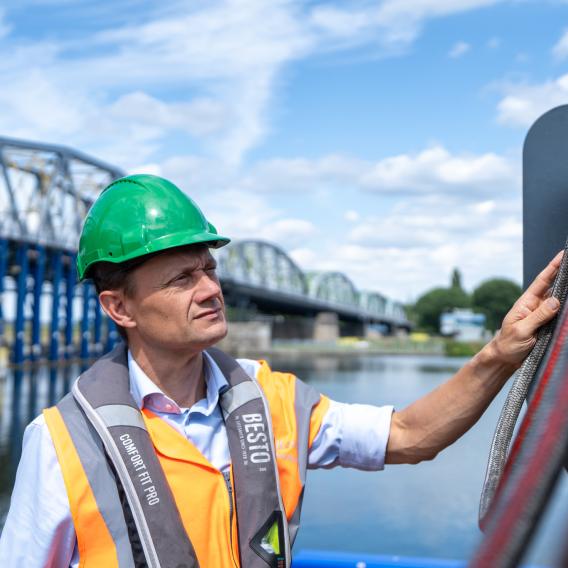
Creep resistance and the case for Technora® in weir gate lifting
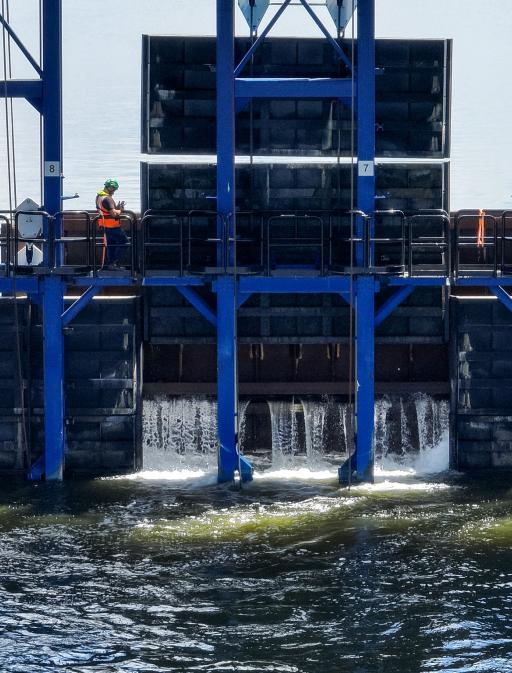
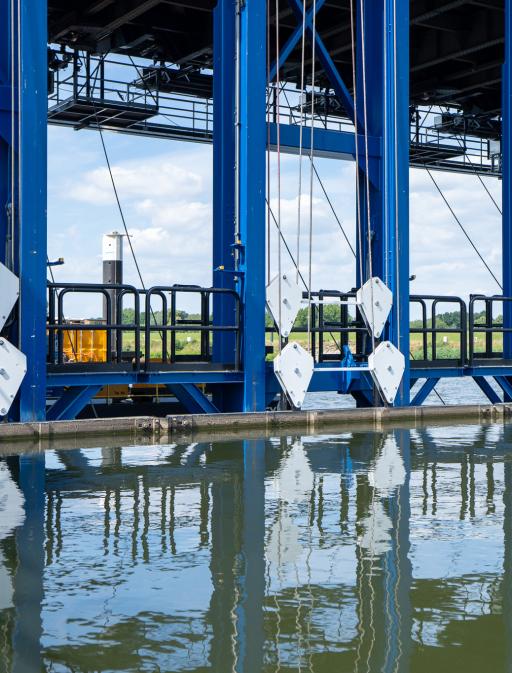
The Grave Weir's gate system works through tension. Each gate hangs from two ropes and must remain exactly horizontal during every lifting cycle. If one rope extends under constant load while the other holds its length, the gate tilts and smooth operation is compromised. This slow permanent extension under sustained tension is called creep, and it determined the material choice for the gate-lifting side of the system.
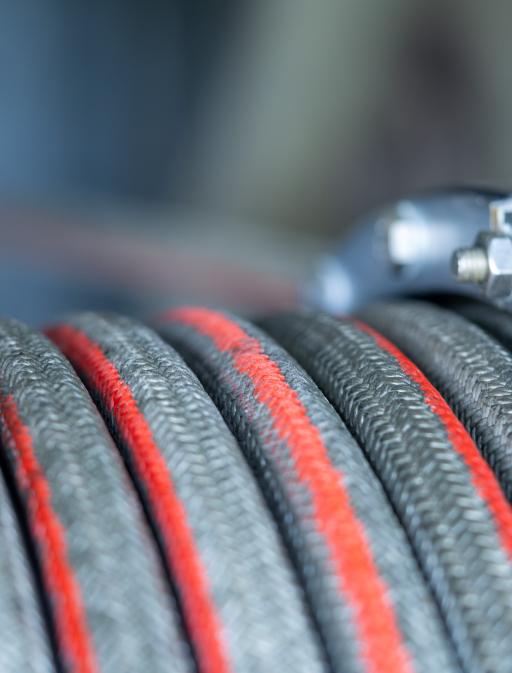
Technora®, a para-aramid fiber produced by Teijin Aramid, does not creep under sustained tensile load. For a gate-lifting application running at a safety factor of 12 between maximum operating load and breaking strain, where two ropes must hold a gate level indefinitely, that property made Technora® the right material for the job. Hampidjan, an Icelandic rope manufacturer, produced the Technora® warp ropes specified for the system.
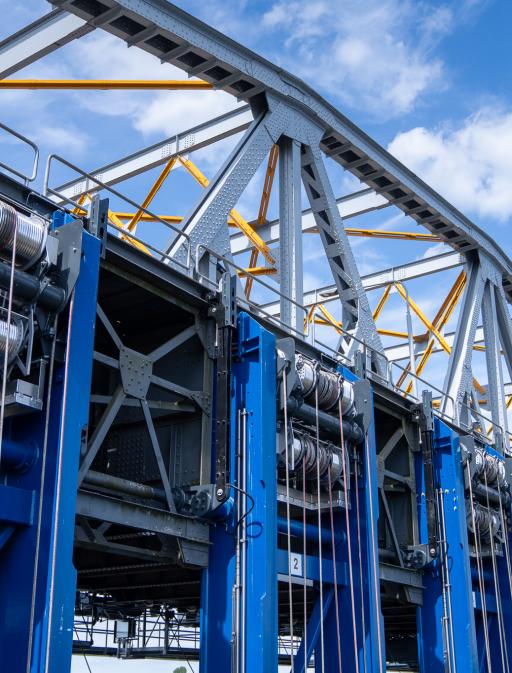
The chain side of the complex presented different conditions. Those ropes operate without constant tension and move continuously in water, so HMPE ropes replaced the chains on that side. The weir now runs 40 HMPE ropes on the chain side and 80 Technora® ropes on the gate-lifting side.
Working with unknowns: the monitoring program at the heart of the project
Fiber rope had not previously been used in Dutch weir infrastructure, and Rijkswaterstaat's engineers needed a solid technical foundation before they could commit to the material choice. Van der Woude worked with the project team to build that foundation, covering the performance distinctions between fiber types that were relevant to this application.
The harder challenge was the absence of fatigue-life data for Technora® warp ropes in a weir gate-lifting system. No norm prescribed a replacement interval, and no prior installation provided a reference point. Van der Woude's position was that committing to a predicted interval without data served no one well. "We don't know the lifetime of a fiber rope used in this type of system, because it's never been done before. That's just a fact, and we should not try to predict it. We should accept it and work from there." OMTEC, Mourik, and Rijkswaterstaat agreed on a structured testing program: remove ropes periodically over the coming years, break-test them, open them for internal inspection, and let the results set the replacement interval.
That agreement required genuine trust on Rijkswaterstaat's part, trust that Mourik's long working relationship with the authority, built across many similar weir renewals along the Maas, helped make possible.
Photography by Jelle Dijkstra
Photography by Jelle Dijkstra
Photography by Jelle Dijkstra
Why system design determines whether fiber rope delivers
"Don't consider it a drop-in replacement," van der Woude says of fiber rope in infrastructure applications. "It sets the wrong mindset: that you can take an existing system, swap out the steel wire rope or chain for fiber, and carry on as before. The first thing you lose with that approach is the opportunity to optimize the system around the rope." His estimate is that successful fiber rope integration is 80% system design and 20% rope.
Van der Woude's involvement on the Grave Weir began before the winch configurations were fixed, before the sheave geometries were set, and before the reeving layout was drawn. That early engagement shaped decisions that determined how well the system would perform over its lifetime.
One concrete example: the chain connections on the weir gates were originally positioned below the waterline, which meant replacing them required lifting the gate clear of the water, securing it in place, and removing the old rope from below. The redesigned system routes the rope down through a pipe beneath the water and back up to a connection point at the top of the structure, accessible from the maintenance platform above. Replacing a rope now means disconnecting it at the top, feeding the new rope back through the pipe, and reconnecting. A confined job, but one requiring no water access and no lifting equipment.
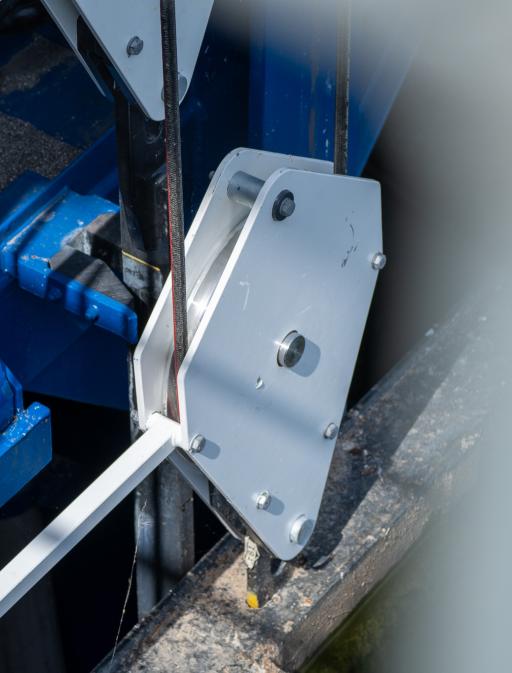
The winch design, sheave geometry, and reeving layout were all configured to match the specific bending and load characteristics of the Technora® warp rope. Each of these decisions compounded: a system built around the fiber's properties from the start captures the full operational benefit, where an adapted system would have captured only part of it.
Rope replacement is now a two-person job, done from a service van. Under the old system, a rope change required more than ten people, a crane, a barge, bridge closures, and traffic management. Today each Technora® rope is light enough to be carried to the worksite on a technician's shoulder. "It's just a service engineer in a van driving up, doing his job, starting at ten, leaving at twelve for lunch, and that's it," van der Woude says. The approach paid off beyond the rope itself: the project was completed one to two months ahead of schedule, with final site works done in regular hours, free of the night shifts and weekend pressure that typically characterize the closing stages of a civil infrastructure project of this scale.
A documented first, and what comes next
Van der Woude is measured about what the project means beyond the Grave Weir. The system has been officially handed over to Rijkswaterstaat, and the multi-year monitoring dataset now building will be the first of its kind for this application. The acceptance of the material extended further than the engineering team: the Grave Weir is a national heritage structure, and Rijkswaterstaat's Monument Committee, responsible for protecting the aesthetics of listed infrastructure, took the time to understand what engineered fiber rope represents for a structure of this age and character, and came to appreciate it on its own terms.
Van der Woude's view is that the project's value lies in demonstrating the conditions under which fiber rope makes sense, not in advocating for its universal adoption. Where those conditions align and a full-system redesign is already required, fiber rope's operational advantages are strong enough to make the case. "Realistically, I could see fiber ropes being used in those projects where an overall new system design is applied, to obtain the full potential benefits of fiber rope."
Other weir and sluice complexes along the Dutch river network face similar pressures as their aging infrastructure approaches renewal. For the engineers and asset managers responsible for those structures, the Grave Weir project provides something that did not exist before: a documented first application of Technora® fiber ropes in Dutch weir infrastructure, and a replicable model for how fiber rope adoption in civil infrastructure can be done with the right foundations.
Learn more about Technora® and it's performance advantages for infrastructure lifting applications.
Photography by Jelle Dijkstra
Photography by Jelle Dijkstra
Photography by Jelle Dijkstra